Waikato
Home to the most visited film set in New Zealand. The Alexander family's sheep farm near Matamata was chosen as the Shire, and the rebuilt Hobbiton Movie Set now runs daily guided tours year-round.
10 regions. 82 confirmed locations. Both islands. From Waikato to Southland.
Explore the interactive mapOn the road, the regions fall into a handful of clusters. In the North Island, Port Waikato and Matamata sit south of Auckland, the Ruapehu sites around Whakapapa and Ohakune hold most of Mordor, and Wellington, the production's base, has the largest North Island cluster, with the Hutt Valley close by and the Wairarapa an hour over the hill. In the South Island, Queenstown, Glenorchy and Wanaka form the densest cluster in the country, Te Anau and Mavora Lakes anchor Southland, and Canterbury splits between Mount Sunday and the Mackenzie Basin. Nelson and Golden Bay mix roadside stops with helicopter-only peaks, and the West Coast's single site is seen by scenic flight.
That's a spread of around 900 km north to south in a straight line. The North Island contributed 30 locations, including Mount Doom (Tongariro), Hobbiton (Waikato), and Rivendell (Wellington). The South Island accounts for 52 locations, with Otago alone providing 26, more than any other region. Each region maps to different parts of Middle-earth, and most filming sites are publicly accessible.
The North Island contributed 30 filming locations across 5 regions. Wellington was the production's home base with 15 locations, while the volcanic Central Plateau around Tongariro provided Mordor's most recognisable landscapes. The Waikato's rolling farmland became the Shire, home to the only permanent film set still standing.
Home to the most visited film set in New Zealand. The Alexander family's sheep farm near Matamata was chosen as the Shire, and the rebuilt Hobbiton Movie Set now runs daily guided tours year-round.
The volcanic heart of the North Island delivered Mordor. Mount Ngauruhoe is the visual stand-in for Mount Doom, while the barren upper slopes of Mount Ruapehu provided the Battle of Dagorlad, Emyn Muil, and the Gates of Mordor.
The bush-clad Rangitikei River Gorge near Taihape doubled for a stretch of the River Anduin. Aerial and ground-level shots of the Fellowship's boat journey were captured in this steep, forested canyon.
Putangirua Pinnacles on the Wairarapa coast provided the eerie, eroded landscape for the Paths of the Dead. The towering rock formations are publicly accessible and look exactly as unsettling in person as they do on screen.
The production's home base and the region with the most North Island filming sites. Kaitoke Regional Park became Rivendell, Mount Victoria's forest tracks were used for Shire woodland scenes, and Harcourt Park stood in for the Gardens of Isengard.
The South Island is where the bulk of Lord of the Rings filming happened: 52 of the 82 confirmed locations are below the Cook Strait. The dramatic mountain ranges, tussock high country, and ancient beech forests gave Jackson landscapes that needed almost no digital enhancement.
Mount Sunday in Hakatere Conservation Park is the filming location for Edoras, capital of Rohan. The flat-topped hill rising from the Rangitata River flats is one of the most recognisable LOTR sites in the country.
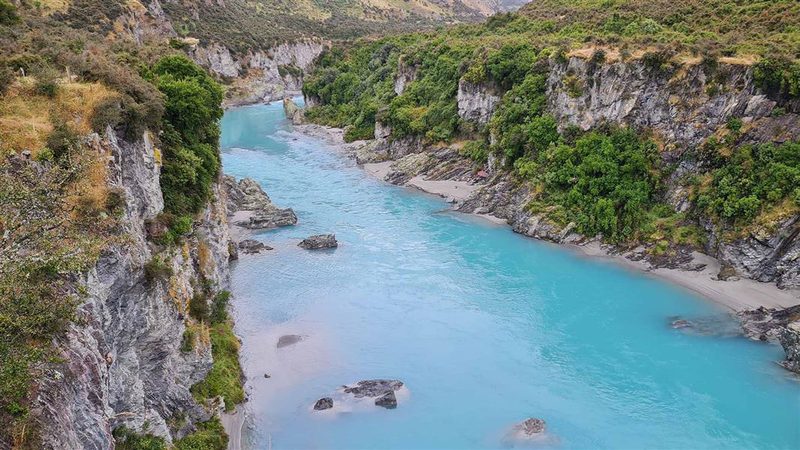
The single largest concentration of filming locations in New Zealand. Queenstown and Glenorchy are the hub: Paradise Valley provided Isengard and Lothlorien, Skippers Canyon was the Ford of Bruinen, and the Remarkables supplied Dimrill Dale.
Mavora Lakes Conservation Area, northwest of Te Anau, is the focal point. North Mavora Lake was Nen Hithoel, the surrounding beech forest stood in for the edge of Fangorn, and the Kepler Mire provided the Dead Marshes.
Mount Gunn near Franz Josef Glacier was used for the beacon-lighting sequence in The Return of the King. The glaciated Southern Alps peaks represented the Ered Nimrais as the signal fires raced from Minas Tirith to Edoras.
The top of the South Island contributed two remote locations in Kahurangi National Park. Mount Owen served as Dimrill Dale and Takaka Hill doubled for Chetwood Forest, where Aragorn leads the hobbits after leaving Bree.
Both. The North Island has 30 filming locations across 5 regions, including Hobbiton (Waikato) and Mount Doom (Tongariro). The South Island has 52 locations across 5 regions, making it the dominant filming ground. Otago alone accounts for 26 locations, the single densest region.
Peter Jackson used 10 distinct regions across both islands, from the Waikato in the central North Island to Southland at the bottom of the South. That covers around 900 km of the country in a straight line. Every major landscape type in New Zealand appears somewhere in the trilogy: volcanic plateau, temperate rainforest, alpine peaks, tussock plains, and coastal cliffs.
Otago, with 26 confirmed locations. The Queenstown and Glenorchy area is the densest cluster, covering Lothlorien, Isengard, the Ford of Bruinen, Amon Hen, the Argonath, Dimrill Dale, and more. It is the single best base for visiting the highest number of filming sites.
They are spread across both islands, around 900 km in a straight line from the northernmost sites in the Waikato down to the southernmost in Fiordland and Southland. A full LOTR road trip covering all accessible locations takes a minimum of two weeks. Most visitors focus on one island or one region at a time.
Queenstown is the best single base. Otago has 26 locations within day-trip range, and Te Anau (Southland) is only two hours south. For the North Island, Wellington covers 15 locations and is an easy day trip to the Wairarapa. A two-centre trip using Queenstown and Wellington gives you access to the majority of all filming sites.
Every region maps to different Middle-earth realms. Tongariro's volcanic plateau is unmistakably Mordor. Canterbury's windswept tussock high country is pure Rohan. Otago's beech forests and glacial lakes provided Lothlorien, Isengard, and Ithilien. Wellington's dense native bush became the Shire and Rivendell. The reason Jackson filmed here is that New Zealand already looked like Tolkien's world. He just had to find the right angles.
Ready to plan your Middle-earth adventure?
Open the interactive mapThis resource is built and maintained by a small team of Tolkien fans. Learn about our story or get in touch.